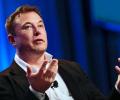
American tech billionaire Elon Musk on Saturday said his proposed visit to India has been postponed due to "very heavy Tesla obligations". The electric carmaker Tesla CEO -- who was expected to be in India on April 21 and 22 and scheduled to meet Prime Minister Narendra Modi -- wrote on X that he is looking forward to coming to India later this year.

Though it will replace Laura, the new model would retain latter's petrol and diesel engines.
With competition hotting up, Skoda had to drop the prices of the Fabia.
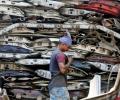
Ahead of the festive season, several passenger and commercial vehicle manufacturers have agreed to offer discounts of 1.5-3 per cent on new vehicle purchase against scrapped old vehicles after a meeting with Union Minister Nitin Gadkari, an official statement said on Tuesday. The statement further said Mercedes Benz India has offered a flat discount of Rs 25,000, which will be over and above all existing discounts. Union Road Transport and Highways (RT&H) Minister Nitin Gadkari on Tuesday chaired a meeting with the SIAM delegation at Bharat Mandapam, where he addressed pressing issues in the automobile industry.
The factory, inaugurated on Tuesday, will initially build Skoda Auto AS's Fabia hatchbacks from May before beginning production of a hatchback version of Volkswagen Polo in 2010. With this, VW becomes the last of the world's biggest auto manufacturers to mark its foray into India through a full production facility.

Under its India 2.0 plan, the Volkswagen group will develop and manufacture cars to meet the requirements of the region.

Skoda's Kodiaq is the newest kid on the block and promises to give the aforesaid SUVs a run for their money. Will it? Indian automobile website MotorBeam.com finds out.
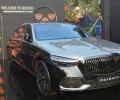
For the first time in history, the luxury car market is poised to cross the sales mark of 50,000 units in 2024, with Mercedes leading the way
The bookings of the Yeti had started a few months ago and the company claims it to be difficult to meet all the current orders till this year end.

If you are planning to buy an electric car in the near future, it would be highly advisable to wait for these upcoming electric SUVs.

After a brief lull during the pandemic, there is a strong revival in luxury car sales, bolstered by more launches across price bands, replacement demand, ban on old diesel vehicles in the NCR, and 'revenge buying'.

Due to the continued pressure of high costs, Toyota is considering a price increase of up to 3 per cent across models with effect from January.

Every year, carmakers announce at the end of November or December their plans to increase prices of their vehicles by January.
Carmaker Skoda India has decided to price Fabia, the hatchback it plans to launch at the Auto Expo in January, in the range of Rs 5-6 lakh.

However, notable absentees from the expo will be Honda, Toyota, Ford, BMW, Audi, Lexus, Volvo and Jaguar Land Rover along with two-wheeler majors Hero MotoCorp, Bajaj Auto and TVS Motor Co.

New participants included Chinese players such as Great Wall Motors and Haima Automobile along with Olectra.


Passenger vehicle majors like Hyundai, Tata Motors, M&M, Toyota Kirloskar and Honda on Wednesday reported growth in domestic sales in August riding on festive sentiments, although market leader Maruti Suzuki posted a decline amid a semiconductor shortage affecting the industry. The country's largest carmaker Maruti Suzuki India Ltd (MSIL) reported domestic sales at 110,080 units, as compared to 116,704 units in the same month last year, down 6 per cent. "Sales volume of the company in August 2021 was affected due to electronic components shortage.

India's flagship motor show Auto Expo 2023 kicked off on Wednesday with the global unveiling of Suzuki Motor Corporation's concept electric SUV 'eVX' which is slated to hit the market by 2025. The company's Indian arm Maruti Suzuki India is among the major manufacturers participating in the show that has returned after three years. The Concept eVX is a mid-size electric SUV concept designed and developed by Suzuki Motor Corporation (SMC), Japan. It will be powered by a 60 kWh battery pack offering up to 550 km of driving range on single charge.
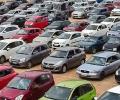
Leading carmakers Maruti Suzuki and Hyundai witnessed a double-digit drop in sales in October on account of the global semiconductor shortage impacting production. Kia India, Honda Cars and MG Motor also saw a fall in dispatches last month as compared with October 2020. However, companies like Tata Motors, Mahindra, Nissan and Skoda managed to post positive numbers last month despite the supply chain challenges.

Nissan and Renault say they will compete with new models, especially small cars, and by growing their dealer network.

India is a market for low-priced cars with low running costs. The global majors don't have models that fit the bill; only Maruti and Hyundai have successful entry-level models, observes T N Ninan.
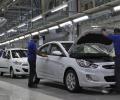
Leading carmakers Maruti Suzuki, Hyundai and Tata Motors reported robust dispatches to dealers in May on the back of strong demand for passenger vehicles across regions, even as the global semiconductor shortage continued to impact production. Mahindra & Mahindra, Kia India, Toyota Kirloskar Motor, Honda Cars and Skoda also witnessed strong demand for their models last month. The month of May also witnessed Tata Motors race ahead of Hyundai in terms of domestic wholesales.

The China auto show saw some amazing models being rolled out, some for the first time. Rajesh Karera/Rediff.com picks the best of the lot.

It is simple yet appealing, well-built and provides excellent ride quality, and now the Skoda Rapid has been fitted with a 7-speed DSG automatic transmission.

The global semiconductor shortage hit passenger vehicle sales in September, with major manufacturers like Maruti Suzuki, Hyundai and Mahindra & Mahindra reporting a decline in sales on Friday. Kia India and Honda Cars also reported a dip in wholesales last month as compared with the year-ago period. Carmakers like Tata Motors, Toyota Kirloskar Motor, Nissan and Skoda, however, reported an increase in passenger vehicle dispatches last month despite supply chain issues.

About two dozen car & SUV models and two-wheelers lined up for launch
During the six-day-long event, automakers have planned 10 global launches, 26 India specific launches, six concept vehicles, seven facelifts and 21 vehicle unveilings.

If you're someone looking for some serious performance along with a practical family sedan with generous cabin space and do not mind spending more on fuel and the company's after-sales service, then this is all the car you'll ever need.

With two drive options, three battery options and a design selection option, the Enyaq promises to tick all the boxes.

With swanky showrooms and VR-enabled sales platforms Maruti Suzuki, Tata Motors, and Skoda bet on shine and gloss,and place their faith in experiential branding.
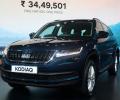
Skoda's new flagship offering will compete with the likes of Toyota Fortuner, Ford Endeavour and Isuzu MU-X as well as Volkswagen Tigua.
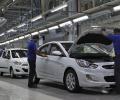
Domestic passenger vehicles sales rose by 23 per cent to a record of 37.93 lakh units in 2022 led by the likes of Maruti Suzuki, Hyundai and Tata Motors as the companies rode on easing of pandemic related challenges and semiconductor shortages to cash in on pent up demand, specially for SUVs. Other manufacturers like Toyota Kirloskar Motor and Skoda India also reported record sales in 2022. "The industry wholesales in January to December 2022 were just short of 38 lakh units.

The new Duster will go head-to-head with popular models like Hyundai Creta, Kia Seltos, Volkswagen Taigun, Skoda Kushaq, Maruti Suzuki Grand Vitara, Toyota Urban Cruiser Hyryder, MG Astor, etc in the highly competitive mid-size SUV segment.


Through a combination of local manufacture and imported CBU models, the company makes and sells four SUVs, one hatchback, and one sedan.
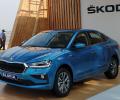
Stylish, sleek, a coupe-like sedan with generous amount of space is what the Slavia is all about.

China's biggest carmaker, which own brands like Maxus, MG, Roewe and Yuejin, plans to invest $1 billion in India manufacturing unit, reports Swaraj Baggonkar from Mumbai.
That means a manufacturer looking at a market like India needs to decide whether small, cheap cars or small, expensive cars or both will work better for them, says Pavan Lall.
As India is progressing towards Bharat Stage IV (BSIV) emission norms, most cars still run under BSIII standard.
